
What a Technician Sees on These Calls
Most replacement calls start the same way: a homeowner points at a door that's swollen shut at the bottom corner, or rusted through along the panel seams, or dented from a storm and wants to know what to put up instead. By the time we're standing in the driveway, the decision usually isn't about style anymore — it's about which material will actually hold up to a Florida summer, a hurricane season, and the humidity that never really goes away. Here's how the five common options stack up for homes in this part of the state.
Steel
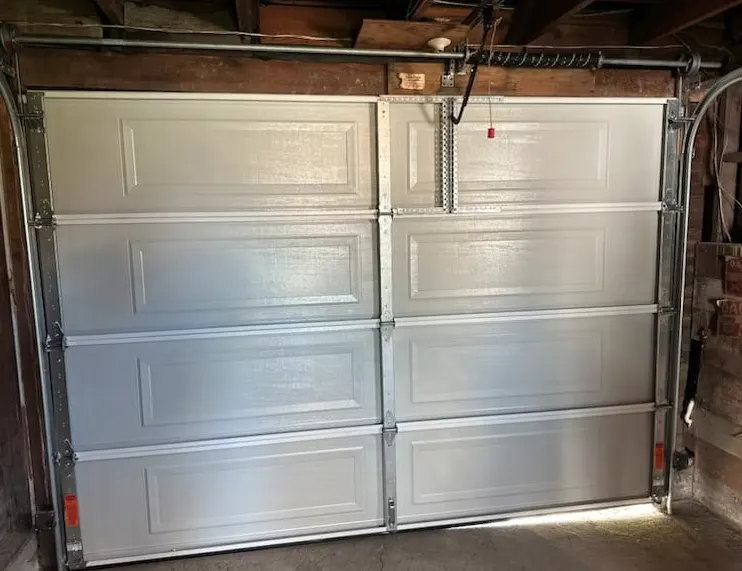
Steel is the standard choice for a reason. It's available in multiple gauges, it can be ordered with factory-rated wind-load bracing to meet local building requirements, and a baked-on finish holds up well in heat. The trade-off is rust — not from the steel itself failing, but from chipped paint, lawn equipment dings, or sprinkler overspray sitting against bare metal. Once a scratch goes untreated through a few rainy seasons, surface rust can work its way under the finish. Insulated steel (two layers of steel with polyurethane or polystyrene between them) resists dents better and keeps a garage noticeably cooler in summer, which matters if the garage shares a wall with living space.
Wood
Wood doors look great and can be built to serious wind-load specs, but they're the highest-maintenance option in a humid climate. Afternoon downpours followed by hours of sun is exactly the moisture cycle that makes wood swell, then shrink, then swell again. Over a few seasons that cycle telegraphs through the finish as cracking, and panels can warp enough that the door no longer seats evenly in the track. If you want the look of wood, a carriage-style steel or composite door with a wood-grain overlay gets you 90% of the appearance without the recoating schedule real wood demands.
Aluminum
Aluminum won't rust, which makes it appealing anywhere near the coast where salt air accelerates corrosion on other metals. It's lighter than steel too, which is easier on an aging opener. The downside is that it dents more easily and doesn't hold up as well structurally under wind load unless it's reinforced, so it needs to be specified correctly for storm season rather than treated as an automatic coastal upgrade. For most inland properties, aluminum is less about climate performance and more about a specific look — full-view glass-and-aluminum doors, for example.
Fiberglass
Fiberglass is the material most resistant to the swelling and rot problems that come with Florida humidity, since it doesn't absorb moisture the way wood does and won't corrode like bare steel. It also holds up to sun exposure without fading as fast as some painted finishes. The compromise is impact resistance — fiberglass can crack under a hard hit (a stray baseball, a bumped trailer hitch) in a way steel will just dent. It's a strong option for a door that gets a lot of direct afternoon sun but isn't exposed to much physical contact.
Composite
Composite doors (wood-fiber composite over a steel or aluminum frame) are built specifically to resist the rot, swelling, and insect issues that come with humid climates, while still giving you a wood-look finish. They typically cost more upfront than steel but need far less upkeep than real wood over the life of the door. For a homeowner who wants the carriage-house aesthetic without repainting every couple of years, this is usually the better long-term buy over actual wood.
Trade-Offs at a Glance
- Best rust resistance: aluminum, fiberglass
- Best wind-load performance for storm season: insulated steel, reinforced aluminum
- Best moisture/humidity resistance: fiberglass, composite
- Lowest maintenance: steel (factory finish), fiberglass
- Highest maintenance: real wood
- Best dent resistance: insulated steel
The Typical Recommendation
For most homes in Ocala, Belleview, Silver Springs, Dunnellon, Marion Oaks, Summerfield, and Anthony, an insulated steel door with a quality factory finish and correct wind-load rating is the practical middle ground — it handles heat, storms, and everyday wear without the upkeep wood demands. If salt air exposure or constant moisture is a bigger concern on your property, fiberglass or composite is worth the higher upfront cost for the lower maintenance over time.
When to Call Ocala Door & Opener
If your current door is swollen at the seams, rusted along the bottom panel, or dented badly enough that it's binding in the track, it's worth having it looked at before deciding what to replace it with. We handle Garage Door Installation & Replacement across all these materials and can talk through which one fits your home's exposure and budget. If the door itself is sound but the hardware is the problem — worn rollers, a stuck track, a spring that's past its life — our Garage Door Maintenance & Tune-Up service can often extend the life of what you already have.
If you're weighing a replacement or just want an honest read on what's going on with your current door, call Ocala Door & Opener. We serve Ocala, FL and the surrounding communities, and we'll give you a straight answer on what's worth fixing and what's worth replacing.